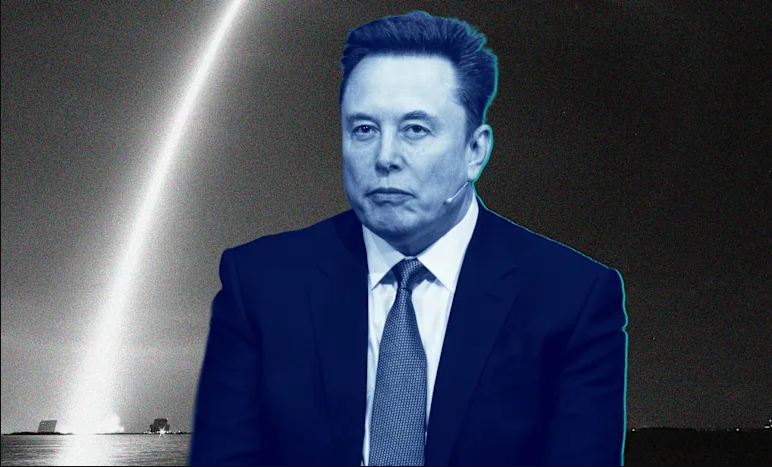
Elon Musk runs five companies at once, works 100-hour weeks, and tweets at 3 AM. People watching this behavior ask one question: does Elon Musk have ADHD? The answer is more complex than a simple yes or no. While Musk has publicly confirmed his Asperger's diagnosis, he has never stated he has ADHD. Yet his behavior shows striking patterns that ADHD coaches and professionals recognize immediately. This article cuts through speculation to examine what we know about Musk's neurodivergence, why the ADHD question persists, and what his success means for understanding how different brains work.
Musk made headlines in May 2021 when he hosted Saturday Night Live. He opened his monologue with a direct statement about his neurodivergence.
"I'm the first person with Asperger's to host SNL... or at least the first to admit it," Musk said.
This marked the first time he publicly discussed his diagnosis. He went on to explain his sometimes awkward social behavior and unconventional communication style.
Asperger's syndrome is now classified as part of Autism Spectrum Disorder (ASD). People with this diagnosis often show:
Musk has never publicly claimed to have ADHD. No medical records confirm this diagnosis. No interviews exist where he states it directly.
So why does the question persist?
The speculation about Elon Musk having ADHD comes from observable patterns in his behavior and work style.
Musk currently leads:
He doesn't just hold titles at these companies. He actively participates in engineering decisions, product design, and daily operations across all of them.
His weekly schedule looks like this:
This constant switching between contexts matches a pattern often seen in people with ADHD. The ability to rapidly shift focus between unrelated tasks is both a challenge and strength of ADHD cognition.
Musk regularly works 80-100 hours per week. During critical periods, this number reaches 120 hours.
Chris Bakke, a former X employee who reported directly to Musk, described the CEO's routine:
Musk has been known to sleep on factory floors during production crises, wanting to experience problems firsthand.
This pattern of intense, sustained concentration on specific problems mirrors ADHD hyperfocus. When deeply engaged with a task, people with ADHD can work for hours without noticing time passing, often forgetting to eat or sleep.
Musk's career shows repeated patterns of high-risk decisions:
Impulsivity is a core ADHD trait. The ADHD brain struggles with executive function, which includes weighing consequences before acting.
Musk's Twitter activity shows patterns worth noting:
He has described his own mind in revealing terms. On the Lex Friedman podcast, he said: "My mind is a storm, and I don't think most people would want to be me."
Musk structures his day into five-minute blocks. Each segment has a specific task or focus.
This level of detail seems contradictory for someone with ADHD, which is known for causing time management problems. But it actually represents a common ADHD coping strategy. External structure compensates for internal difficulty with time perception.
People with ADHD often develop rigid systems to manage what their brains struggle to handle naturally.
Does Elon Musk have ADHD alongside his confirmed autism diagnosis? The possibility exists because these conditions frequently co-occur.
Studies show 50-70% of people with autism also meet criteria for ADHD. The conditions share overlapping features:
Shared Characteristics:
Different Characteristics:
ADHD typically involves:
Autism typically involves:
Musk shows traits from both lists. This creates what some call "AuDHD" - having both autism and ADHD.
Andrew Lewis is an ADHD coach with over 16,000 hours of experience coaching more than 600 adults with ADHD. He wrote about Musk on his website SimplyWellbeing.
"Having coached over 600 ADHD adults and over 100 ADHD entrepreneurs - Elon definitely fits my criteria for ADHD," Lewis stated.
He noted specific ADHD-like traits:
Dr. Edward Hallowell, a psychiatrist specializing in ADHD, has commented on Musk's cognitive profile. He noted that Musk exhibits characteristic traits of ADHD executives, including rapid ideation and parallel processing capabilities.
But these are observations from a distance, not official diagnoses.
Does Elon Musk have ADHD? We cannot answer this definitively without his confirmation or access to his medical records.
Mental health professionals follow strict ethical guidelines. They cannot diagnose someone they have never evaluated. The American Psychiatric Association explicitly prohibits what they call the "Goldwater Rule" - offering professional opinions about public figures without examining them.
Reasons this rule exists:
We see Musk through filtered lenses. His public persona may differ from his private experience. Social media shows curated moments, not complete reality.
Speculating about whether Elon Musk has ADHD without evidence can cause problems:
For the individual:
For the ADHD community:
For understanding neurodivergence:
Despite ethical concerns, certain behavioral patterns make the question persist.
Musk's approach to work shows several ADHD-associated traits:
Inconsistent Performance
People with ADHD often show what looks like inconsistent ability. They can hyperfocus on interesting projects for hours but struggle with boring administrative tasks.
Musk admits he skips meals and ignores basic self-care during intense work periods. He focuses entirely on engineering and design problems while delegating routine management tasks.
Deadline-Driven Motivation
Musk is famous for setting impossible deadlines. A former SpaceX executive described his approach: Working on a project for a year with the goal of driving from Los Angeles to New York on one tank of gas, everyone privately thinks the car will be lucky to reach Las Vegas, but "the car gets to New Mexico — twice as far as they ever expected."
ADHD brains respond strongly to urgency and deadlines. The added pressure triggers dopamine release, helping with focus and motivation.
Preference for Asynchronous Communication
Musk has said "I do love email. Wherever possible I try to communicate asynchronously. I'm really good at email."
He avoids phone calls and prefers text-based communication. This gives him control over when and how he responds, reducing the demand for immediate attention switching.
Many people with ADHD prefer asynchronous communication. It allows time to organize thoughts and avoid the pressure of real-time conversation.
Musk's public appearances reveal patterns worth noting:
Rapid Speech and Thought Acceleration
In interviews and presentations, Musk often speaks quickly. His thoughts seem to race ahead of his words. He jumps between topics without clear transitions.
This matches what people with ADHD describe as "racing thoughts" - the experience of multiple ideas competing for attention simultaneously.
Difficulty Sitting Still
Video footage of Musk in meetings shows frequent movement:
Hyperactivity in adults with ADHD often manifests as this kind of restlessness rather than the obvious bouncing seen in children.
Interrupting and Speaking Out of Turn
Musk has been observed interrupting others mid-sentence, jumping into conversations, and blurting out thoughts without waiting for appropriate moments.
ADHD impulsivity affects conversation skills. The brain struggles to hold thoughts in working memory long enough to wait for the right moment to speak.
Musk describes his thinking as "first principles reasoning." He breaks complex problems down to fundamental truths and builds solutions from scratch.
This approach shares similarities with ADHD thinking patterns:
The ADHD brain often sees patterns others miss precisely because it doesn't follow expected pathways.
Whether or not Elon Musk has ADHD, many successful business leaders have confirmed ADHD diagnoses.
David Neeleman founded JetBlue Airways, Azul Brazilian Airlines, and three other airlines. He has both dyslexia and ADHD, and only discovered the ADHD diagnosis in his 30s after struggling as a child with standardized tests and staying focused in school.
Neeleman has spoken openly about his ADHD: "I knew I had strengths that other people didn't have, and my parents reminded me of them when my teachers didn't see them."
He credits his ADHD with giving him creative advantages in business problem-solving.
Richard Branson built a business empire spanning airlines, music, telecommunications, and space tourism. He has both ADHD and dyslexia.
Branson left school at 16 but didn't let academic struggles stop him. He turned his unconventional thinking into business advantages.
Paris Hilton received an ADHD diagnosis in childhood. She has built a successful business career in fashion, fragrances, and entertainment while managing her ADHD.
These successful entrepreneurs share patterns with Musk's behavior:
ADHD doesn't determine success or failure. It creates a different cognitive profile with both challenges and strengths.
The relationship between ADHD and success is complex and often misunderstood.
Research shows people with ADHD are more likely to start businesses than the general population. Traits that cause problems in traditional employment can become assets in entrepreneurship:
Creativity and Innovation
ADHD brains make unusual connections. The scattered attention that seems like a weakness in structured environments becomes valuable when generating new ideas.
High Energy and Drive
The restlessness associated with ADHD translates to relentless drive when directed toward a passion project. This is particularly true during hyperfocus states.
Risk Tolerance
ADHD affects risk assessment in the brain. This can lead to poor decisions, but also allows entrepreneurs to take chances others won't consider.
Resilience to Failure
People with ADHD face rejection and failure regularly from childhood. This builds a certain immunity to discouragement that serves well in business.
Ability to Juggle Multiple Projects
While traditional advice says "focus on one thing," many ADHD entrepreneurs thrive on variety. Working on several projects prevents boredom and maintains engagement.
Success stories like those used to speculate whether Elon Musk has ADHD can create harmful myths. They suggest ADHD is a "superpower" rather than a disorder.
The reality includes significant challenges:
Executive Function Deficits
Even successful people with ADHD struggle with:
Emotional Regulation
ADHD affects emotional control. This can lead to:
Mental Health Comorbidities
People with ADHD have higher rates of:
Physical Health Issues
ADHD is associated with:
High-achieving individuals with ADHD typically have:
External Structure
Self-Awareness
Treatment
Musk has described having support systems, though he remains deeply involved in technical details across his companies.
Whether Elon Musk has ADHD matters less than what his example teaches about neurodivergence.
Human brains exist on continuums. Rather than binary categories of "ADHD" or "not ADHD," we see ranges of:
Some people fall far enough on these spectrums to meet diagnostic criteria. Others show similar traits at subclinical levels.
Musk clearly operates differently than neurotypical individuals. His confirmed autism diagnosis explains some patterns. Other behaviors suggest additional neurodivergent traits.
The neurodiversity movement reframes differences as variation rather than deficit. This perspective asks: what can this brain do uniquely well?
For individuals with ADHD traits, strengths might include:
These traits created disadvantages in traditional school settings but become valuable in entrepreneurship, creative fields, and innovation-driven industries.
Musk has built work environments around his own needs:
Whether intentional or not, these conditions also suit many ADHD individuals. They remove obstacles that traditional corporate structures create for neurodivergent thinking.
Does Elon Musk have ADHD? The question itself may be less important than what observing his patterns teaches us.
Musk's success stems partly from choosing work that suits his cognitive style:
High Stimulation Industries
Space exploration, electric vehicles, and social media are all fast-moving fields with constant change and novelty. They prevent the boredom that many neurodivergent people find unbearable.
Technical Problem-Solving
Engineering and design work offers concrete problems with clear solutions. This suits both autistic and ADHD thinking patterns, which often prefer logical systems to ambiguous social situations.
Entrepreneurial Freedom
Running his own companies lets Musk work how he wants:
Many people with ADHD traits fail in traditional employment but thrive when self-employed.
Even brilliant minds need help. Musk has teams, assistants, and structures that handle what he cannot:
People struggling with ADHD symptoms often try to do everything alone. Successful individuals recognize weaknesses and build systems around them.
Musk himself has questioned whether his "extraordinary mind" has led to personal happiness, mentioning his "relentless mental onslaught" multiple times.
The same traits that enable his professional success create personal challenges. His work schedule leaves little time for relationships. His communication style creates conflicts. His risk-taking causes stress.
There's no perfect brain type. Every cognitive profile involves trade-offs between strengths and weaknesses.
Speculation about whether Elon Musk has ADHD shouldn't distract from the importance of diagnosis for people actually struggling.
Consider professional evaluation if you experience:
Core Symptoms:
Functional Impairment:
Symptoms alone don't mean ADHD. The diagnosis requires that these traits cause significant problems in:
If you suspect ADHD:
Start with primary care - Your regular doctor can do initial screening and refer you to specialists.
See a psychiatrist or psychologist - These professionals can provide comprehensive evaluation and diagnosis.
Try online assessment - Telemedicine platforms now offer ADHD evaluation and treatment.
Document your symptoms - Keep records of how inattention, hyperactivity, or impulsivity affects your life.
ADHD responds well to treatment. Options include:
Medication
Therapy
Lifestyle Changes
Accommodations
Public figures discussing neurodivergence helps reduce stigma, whether or not Elon Musk has ADHD.
When Musk revealed his Asperger's diagnosis on SNL, responses were mixed. Some autism advocates appreciated the visibility. Others felt he didn't represent the full autism spectrum experience.
The disclosure sparked conversations about:
Similar benefits would come from high-profile ADHD disclosures:
Combat stereotypes that ADHD only affects hyperactive children.
Show success is possible with proper support and treatment.
Demonstrate cognitive diversity in leadership and innovation.
Encourage people to seek help by reducing shame around diagnosis.
Highlight different presentations - ADHD doesn't look the same in everyone.
Using successful people as examples can backfire. It creates pressure for people with ADHD to achieve at extraordinary levels or be considered failures.
Most people with ADHD are not billionaires. Most will not found companies or revolutionize industries. That's fine. The goal is functioning well in your own life, not matching Elon Musk's achievements.
You don't need to know whether Elon Musk has ADHD to improve your own life if you struggle with attention, focus, or executive function.
Pay attention to your own patterns:
When do you focus best?
What triggers distraction?
What helps you complete tasks?
Where do you excel?
Create structures that work for your brain:
Time Management
Organization
Focus Enhancement
Motivation
Musk's path works for him. It might not work for you. That's not failure.
Success with ADHD or ADHD-like traits looks different for everyone:
The key is understanding your own brain and building a life around it rather than fighting against it.
We don't definitively know whether Elon Musk has ADHD. He has confirmed autism but never claimed ADHD. His behavioral patterns show traits that ADHD professionals recognize, but observation from a distance cannot replace clinical diagnosis.
What we do know:
About Musk:
About ADHD:
About neurodiversity:
The question "does Elon Musk have ADHD" fascinates us because we want to understand exceptional performance. We seek to categorize and explain what makes some people achieve what others cannot.
But the real lesson isn't whether one billionaire has a particular diagnosis. It's that brains work in wonderfully different ways. Understanding and accommodating that diversity - in ourselves and others - creates space for all kinds of minds to contribute their unique gifts.
If you recognize yourself in descriptions of ADHD, seek evaluation. If you already have a diagnosis, know that treatment works. If you're neurodivergent in any way, understand that your brain isn't broken - it's different. Find environments that suit your cognitive style. Build systems that support your weaknesses. Leverage your strengths.
That's the real takeaway, with or without an answer to whether Elon Musk has ADHD.

The Healing Hub Mental Wellness Ltd is dedicated to promoting emotional well-being and personal growth.

.jpg)


Regulated by:

Reg Ref: ZB818691